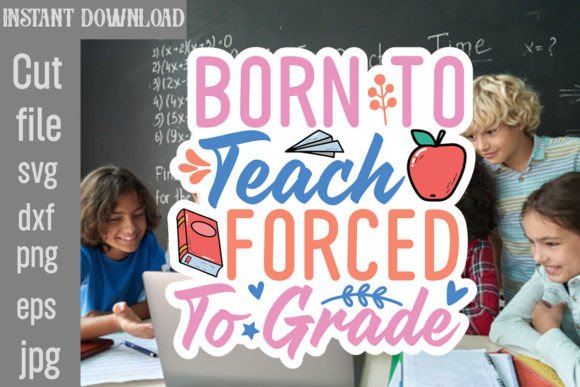
Born to Teach Forced to Grade: A Designer’s Review
As a designer who has spent countless hours digitizing patterns and testing files on various machines, I approach every new machine embroidery design with a mix of curiosity and caution. We have all been there: you find a cute graphic online, download it, and hope it translates well from screen to fabric. Recently, I evaluated the Born to Teach Forced to Grade SVG Cut Fi to see if it holds up under the needle. This is not just about whether the file opens correctly; it is about how it performs in real-world scenarios for crafters, Etsy sellers, and boutique owners.
First Impressions and Visual Personality
The phrase "Born to Teach, Forced to Grade" resonates deeply with educators. It captures a specific mood—a blend of passion for teaching and the weary humor of administrative burdens. Visually, this design leans into that relatable sentiment. When I first loaded the digital embroidery file, I looked closely at the typography and layout. For embroidery, font choice is critical. Thick, bold letters generally stitch out cleaner than thin, wispy scripts, especially on textured fabrics.
This design appears to balance readability with personality. The layout suggests it is intended for horizontal placement, making it ideal for the chest of a sweatshirt or the center of a tote bag. As a piece of Crafts and Graphics content, it bridges the gap between digital art and tactile creation. The visual personality is professional yet approachable, which is exactly what teachers look for in their personal and classroom apparel.
Real-World Application: The Teacher’s Tote Scenario
To truly test the viability of this design, I imagined a specific project: a custom canvas tote bag for a middle-school teacher. Canvas is a sturdy fabric, but it has a distinct weave that can swallow small details. I considered how the Born to Teach Forced to Grade SVG Cut Fi would look stitched onto a natural cotton canvas.
In this scenario, the design serves as both decoration and identity. A teacher carrying books and papers needs a bag that is durable and recognizable. If the stitch density is too low, the background fabric might show through the letters, reducing legibility. If it is too high, the bag could pucker. My assessment focuses on how the design handles these tensions. For a handmade product like this, clarity is king. The design must read clearly from a distance, functioning as a badge of honor for the educator.
Beyond tote bags, this design shines in custom apparel. Imagine it embroidered on the left chest of a navy blue cardigan or across the back of a cozy fleece jacket. These are high-value items for small shop owners. When a customer sees a clean, crisp execution of a witty phrase, they perceive higher quality. This directly impacts buyer engagement and trust in your brand.
Technical Considerations for Embroiderers
Before running this design on your machine, there are several technical factors to consider. The product description states that the download includes an SVG, DXF, EPS, and PNG. It is crucial to understand that these are primarily cut files and vector graphics, not necessarily native embroidery formats like PES or DST. This means you will likely need to use embroidery software to convert the vector paths into stitches, or use the PNG as a reference for manual digitizing.
If you are converting this yourself, pay attention to stitch density. For a phrase of this length, you want to avoid excessive overlapping stitches that create bulk. A combination of satin stitch for smaller elements and fill stitch for larger letters often works best. However, if the letters are narrow, satin stitch is preferable to maintain sharp edges. Always check the width of your columns; if they are too wide for a satin stitch, you may need to break them into multiple passes or use a fill pattern.
Stabilizer choice is another critical variable. For stretchy fabrics like t-shirts or sweatshirts, a cut-away stabilizer is non-negotiable to prevent distortion after washing. For woven fabrics like aprons or pillow covers, a tear-away might suffice, but I always recommend testing on scrap fabric first. This simple step saves hours of frustration and prevents ruined garments.
Navigating Fabric and Hoop Constraints
Not every surface is friendly to detailed text. When using Born to Teach Forced to Grade SVG Cut Fi on curved surfaces like caps, you must be mindful of the hoop size and the curvature of the bill. Text can distort easily on rounded surfaces. I advise keeping the design relatively small and centered to minimize stretching issues.
Dark fabrics present another challenge. If you are stitching white thread on black fabric, any gaps in the stitching will be glaringly obvious. Ensure your digitizing covers the background completely. Conversely, on light fabrics, dark threads provide excellent contrast, enhancing the visual appeal of the finished product. Always test your thread colors against your fabric choice. A mockup can help, but nothing replaces a physical test stitch.
Be cautious with very small hoop sizes. If the design is large, you may need to split it or resize it, which can affect the proportion of the letters. Resizing too much can make thin lines disappear or thick lines blob together. Check the minimum recommended size for clarity before committing to a project.
Commercial Viability and Brand Consistency
For Etsy sellers and small shop product creators, consistency is key. Using a design like this across a range of products—aprons, tea towels, embroidered patches—creates a cohesive brand identity. Teachers love themed collections, especially during holiday embroidery seasons or back-to-school rushes.
This design fits well into the niche of personalized gift items. It is not just a generic phrase; it speaks to a specific professional experience. This specificity increases its value. Customers are willing to pay more for items that feel tailored to their identity. Whether you are creating baby embroidery items for teacher gifts or sweatshirt embroidery for staff lounges, the emotional connection drives sales.
However, always verify licensing terms. While the file is a digital download, ensure you have the right to use it for commercial purposes if you plan to sell finished items. Most designers allow commercial use for physical products, but restrictions may apply to reselling the digital file itself. Clarify this before listing your craft business items online.
Final Verdict for Designers
The Born to Teach Forced to Grade SVG Cut Fi is a strong candidate for educational-themed projects. Its strength lies in its relatability and clear typographic structure. For best results, treat it as a starting point. Convert it carefully, adjust stitch types for your specific fabric, and always test on scraps. By paying attention to detail, you can transform this digital asset into a high-quality finished product that resonates with your customers. Whether for a printable mockup or a stitched reality, this design offers practical value for the thoughtful creator.