Friends Don t Let Friends Line Dance Graphics for Crafts
As a brand designer and content marketer, I am constantly evaluating new visual assets not just for their aesthetic appeal, but for their strategic utility in real-world campaigns. When I first encountered Friends Don t Let Friends Line Dance, my immediate reaction was one of recognition regarding its potential for niche community engagement. This is not merely a decorative element; it is a cultural signifier that taps into the vibrant, energetic world of line dancing. For brand owners and marketers targeting this demographic, finding the right graphic design asset that balances humor with professionalism can be challenging. This review explores how this specific design fits into a comprehensive marketing strategy, focusing on audience perception, visual consistency, and practical application across various media channels.
First Impressions: Mood, Tone, and Audience Perception
The initial impact of Friends Don t Let Friends Line Dance is defined by its playful yet inclusive tone. In the realm of Crafts and digital design, mood is everything. This asset exudes a sense of camaraderie and fun, which is essential for lifestyle branding. It does not feel stiff or overly corporate, nor does it appear messy or amateurish. Instead, it strikes a balance that feels suitable for casual branding, handmade products, and event promotions. For a small business owner launching a new line of dance apparel or organizing a local dance workshop, this visual immediately signals to the audience that the brand understands their culture. The emotional tone is warm and inviting, fostering a sense of belonging. This is crucial for building audience trust, as consumers are more likely to engage with brands that reflect their values and social habits authentically.
Strategic Application in Marketing and Branding Workflows
To understand the true value of this asset, let us frame it within a real marketing project. Imagine a small business preparing for a seasonal campaign promoting a new series of line dancing classes. The goal is to refresh social media visuals and create a cohesive content kit. Here, Friends Don t Let Friends Line Dance becomes a cornerstone of the visual identity. It can be seamlessly integrated into social media graphics for Instagram posts and Facebook ads, serving as a hook that stops the scroll. Because it is available as an instant download file, specifically optimized for cutting machines like Cricut Explore and Cricut Maker, it offers versatility that static images often lack.
In terms of brand identity and logo design, this asset can be used as a secondary mark or a badge element on packaging. For product labels on merchandise such as tote bags, water bottles, or t-shirts, the design adds a layer of personality that generic text cannot achieve. When used in packaging design, it transforms a simple product into a statement piece. Furthermore, for digital sellers and content creators, this SVG design can be incorporated into Canva templates, allowing clients to customize their own promotional materials while maintaining a professional look. The ability to scale the vector file ensures that the visual hierarchy remains intact whether it is printed on a large event flyer or displayed as a small icon in an email banner.
Supporting Marketing Goals Through Visual Consistency
The primary marketing goal of any campaign is to create a memorable impression. Friends Don t Let Friends Line Dance supports this by providing a clear focal point that enhances professional branding. When used consistently across digital ads, blog graphics, and website headers, it reinforces brand recognition. This consistency is key to improving engagement rates. A disjointed visual presence can confuse potential customers, whereas a unified aesthetic builds credibility. By incorporating this illustration into lead magnets or media kits, coaches and product creators can demonstrate attention to detail and a deep understanding of their niche market.
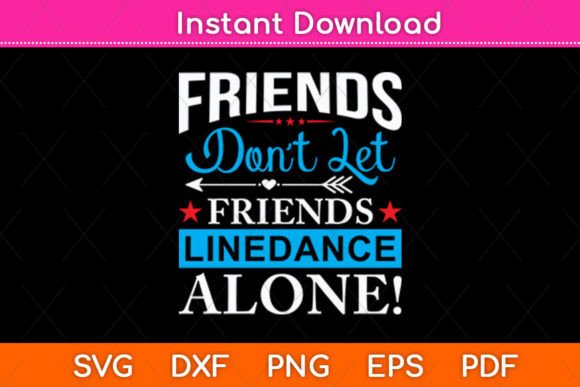
Moreover, the design aids in creating an emotional connection. Line dancing is a social activity, and the phrase "Friends Don't Let Friends Line Dance Alone" emphasizes community. This narrative strength makes the asset particularly effective for content marketing strategies that rely on storytelling. Whether used in editorial layouts for a lifestyle blog or as a decorative element in promotional banners, it helps convey the message that the brand is not just selling a product, but facilitating an experience. This approach leads to stronger customer loyalty and higher conversion rates, as buyers feel personally connected to the brand's ethos.
Optimal Use Cases and Strategic Limitations
Knowing where to place this asset is as important as knowing how to use it. Friends Don t Let Friends Line Dance works best as a hero graphic in campaign headers or as a central element in product launch visuals. It shines in printable design applications such as stickers, posters, and event flyers where the message can be read clearly. It is also highly effective in web design contexts, particularly for landing pages dedicated to community events or class sign-ups. In these scenarios, the design acts as a welcoming invitation, encouraging users to take action.
However, there are contexts where this asset should be used with caution. It is not suitable for formal corporate branding or dense information layouts where clarity and minimalism are paramount. In small mobile graphics, the intricate details of the typography or accompanying elements might lose readability if not scaled correctly. Additionally, it should be avoided in low-contrast backgrounds or overly minimal brands where the playful nature of the design might clash with the established aesthetic. Designers must ensure that the asset does not compete with the main call-to-action in text-heavy ads. The goal is to complement the message, not overwhelm it.
Practical Designer Notes for Implementation
Before integrating Friends Don t Let Friends Line Dance into a paid campaign or client work, several practical steps should be taken. First, test the design against your brand color palette. While the original file may be black and white, experimenting with brand colors can help determine if the design maintains its impact. Check how it pairs with different font styles, such as serif, sans serif, script, or handwritten fonts, to ensure typographic harmony. Review spacing and balance to confirm that the design breathes well within the layout.
It is also essential to preview the asset on mobile screens, as a significant portion of social media consumption occurs on handheld devices. Ensure that the PNG design or clipart versions remain crisp and legible at smaller sizes. Compare the visual against competitor visuals to ensure it stands out without appearing out of place. Finally, always confirm the commercial license terms before using the asset in business branding or for resale. Understanding the licensing restrictions protects both the designer and the client from legal issues. By treating this digital product with the same rigor as any other component of a design bundle, marketers can maximize its potential and achieve a polished, professional result.
In conclusion, Friends Don t Let Friends Line Dance is a versatile and impactful graphic design asset for those operating in the Crafts and lifestyle sectors. Its ability to convey community and fun makes it an excellent tool for enhancing marketing visuals and strengthening small business branding. When used strategically, it elevates content from ordinary to extraordinary, helping brands connect with their audience on a deeper level. For creative entrepreneurs and designers looking to add a touch of personality to their projects, this asset offers a compelling blend of style and substance.