Reviewing the Leopard Print Granny Design
As a designer who spends more time staring at stitch simulations than I do sleeping, I have learned that not every graphic translates well to thread. We often see trendy digital assets flood the market, promising easy sales for Etsy sellers and craft business owners. Today, I am taking a close, practical look at the Best Granny Ever Gifts Leopard Print. This is not just about whether it looks cute on a screen; it is about how it behaves under the needle, how it holds up on fabric, and whether it delivers the professional finish your customers expect from a handmade product.
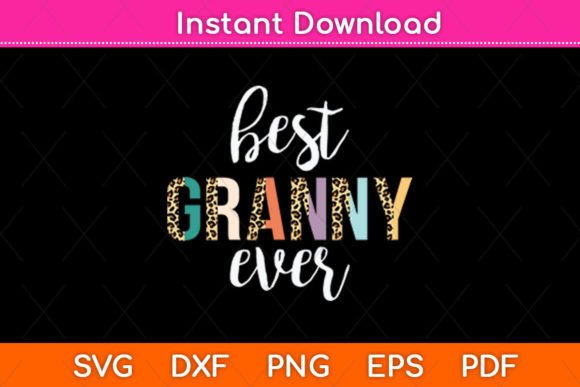
The first impression of this design is bold. The juxtaposition of the affectionate "Best Granny Ever" sentiment with the wild, confident energy of leopard print creates a specific mood. It is playful, modern, and slightly edgy. For many grandmothers, especially those who refuse to fit into the traditional pastel-cardigan stereotype, this visual personality is a perfect match. However, from a technical standpoint, leopard print patterns are notoriously tricky in embroidery. They rely on irregular shapes and high contrast. If the stitch density is off, the spots can bleed together or look like muddy blobs rather than distinct animal markings.
Real-World Application: The Tote Bag Test
To evaluate this properly, I imagined a real-life scenario: creating a custom tote bag design for a spring boutique launch. Tote bags are popular personalized gift items, but they present challenges. The canvas is thick, textured, and often uneven. When digitizing or selecting a pre-made embroidery file for such a surface, you need clarity.
In this case, the Best Granny Ever Gifts Leopard Print works surprisingly well because the text provides a solid anchor. The leopard spots act as a dynamic background or accent, depending on how you scale it. If you are using this for sweatshirt embroidery, the softness of the fleece can swallow small details. I would recommend scaling the design up slightly to ensure the spots remain distinct against the nap of the fabric. For a smoother surface, like a cotton apron or a pillow cover, the original scale likely holds up better, offering crisp definition between the text and the pattern.
Navigating Fabric and Technique Challenges
One must be honest about where this design requires caution. Leopard print is essentially a complex arrangement of organic shapes. In embroidery terms, this often means a mix of fill stitch areas and potentially satin stitch borders, depending on the digitizer’s approach. If you are working with stretchy fabrics, such as jersey knits for baby embroidery projects, you must be vigilant. Without proper stabilization, the pull of the thread can distort the irregular spots, making the design look warped.
I always advise testing on scrap fabric first. Check your stabilizer choice carefully. For a design with this much visual noise, a cut-away stabilizer is often safer than tear-away, especially if the item will be washed frequently. Holiday embroidery gifts are kept for years, and you want the design to survive the laundry cycle without puckering. Additionally, consider the thread colors. Leopard print typically uses browns, tans, and blacks. On dark fabrics, these colors may lack contrast. I recommend running a black-and-white mockup test to see if the design reads clearly. If the spots disappear into the background, you might need to add a backing patch or choose a lighter garment color.
Commercial Viability for Small Shops
For small shop product creators and digital embroidery file resellers, the appeal of this design lies in its niche targeting. It is not just a generic "Grandma" design; it has attitude. This specificity helps in branding. When you list this as a custom apparel option, it attracts a buyer who wants something unique. It fits perfectly into the Crafts and Graphics categories for those looking to expand their seasonal offerings, particularly around Mother’s Day or birthdays.
However, since this is described as an instant download file intended for cutting machines like Cricut and Silhouette, there is a crucial distinction to make. Many buyers confuse vector SVGs with machine embroidery formats. If you are an embroiderer, you cannot directly load an SVG into your embroidery machine. You need a dedicated machine embroidery design file format, such as PES, DST, or JEF. If this product is strictly an SVG, you will need to use embroidery software to convert it, which requires skill to maintain the integrity of the leopard spots. If it includes embroidery files, verify the formats immediately. Always confirm licensing before selling finished product items. Commercial rights vary, and protecting your craft business means knowing exactly what you are allowed to sell.
Design Details and Stitch Clarity
Let’s talk about the text. "Best Granny Ever" is a common phrase, but the font choice matters. In leopard print designs, the text is often the hero, while the print supports it. Ensure the lettering is thick enough. Thin, script fonts combined with busy patterns can become illegible once stitched. A bold, sans-serif or slab-serif font usually pairs best with animal prints, providing a sturdy frame for the chaotic spots. If the design uses applique design techniques, where fabric is layered under the leopard print, the result can be stunning and reduce stitch count, making it softer on garments like caps or hats.
Curved surfaces, like the front of a baseball cap, are difficult for large, flat designs. If you plan to use this on headwear, consider breaking the design into smaller elements or using it as an embroidered patch instead of direct stitching. Patches allow for heavier stabilization and can be removed if the placement is wrong, saving your garment. This is a smart workaround for commercial embroidery projects where consistency is key.
Final Verdict and Practical Tips
The Best Granny Ever Gifts Leopard Print is a strong contender for makers who want to offer something beyond the standard floral or heart-themed grandma gifts. It has personality. But personality requires precision. Here is my checklist for using this design effectively:
- Test on Scrap: Never skip this. See how the spots render on your specific fabric.
- Check Contrast: Ensure the thread colors pop against the garment. Dark threads on dark fabric are a mistake.
- Verify File Types: Confirm if you are getting SVGs for cutting or actual embroidery files. Do not assume compatibility.
- Stabilize Heavily: Leopard patterns show distortion easily. Use quality stabilizer.
- Consider Scale: Larger is often better for readability, especially on textured items like towels or blankets.
In conclusion, this design offers great potential for printable mockup previews and real-world embroidery project success, provided you respect the technical demands of the pattern. It is a fun, fashionable addition to your design assets library, perfect for the modern granny who loves a little wild flair. Just remember that in embroidery, the devil is in the details, and with leopard print, those details are everything.