Review: That’s What I Do I Fix Stuff and I Know
As a designer who has spent years translating digital concepts into tangible threads, I have learned that the most successful machine embroidery design projects are not always the most complex. Sometimes, clarity and personality win over intricate detail. Recently, I evaluated a specific piece of digital art titled That’s What I Do I Fix Stuff and I Know. While this asset is technically categorized under Crafts and sold primarily as an SVG for cutting machines like Cricut and Silhouette, its potential extends far beyond vinyl decals. For the modern maker, understanding how such bold, text-heavy Graphics translate from screen to stitch is crucial for creating high-value handmade product lines.
First Impressions and Visual Personality
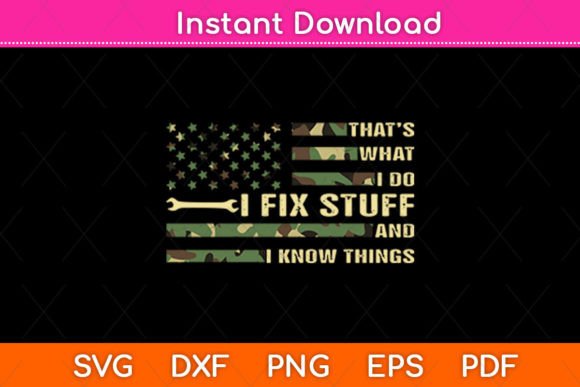
The immediate mood of That’s What I Do I Fix Stuff and I Know is one of confident, understated competence. It does not scream for attention with flashy icons or excessive ornamentation. Instead, it relies on strong typography and a straightforward message. For an embroidery reviewer, this presents both an opportunity and a challenge. The design lacks the built-in stitch paths of a dedicated embroidery file, meaning the creator must interpret the shapes. The visual personality suggests durability and reliability, making it a natural fit for workwear, utility items, and gifts for the practical people in our lives.
When I first loaded the vector path into my digitizing software to simulate an embroidery project, I noticed the clean lines. There are no fragile, tiny details that would likely break under the tension of the needle. This robustness is essential for items that will see heavy use, such as tool bags or daily-wear apparel. The layout is balanced, allowing for versatile placement without feeling cramped or awkwardly scaled.
Real-World Application: The Custom Tote Scenario
To test the viability of this design, I imagined a real-life scenario: creating a line of custom tote bags for a local hardware store or a tradesperson’s spouse looking for a personalized gift. A canvas tote provides a stable, thick fabric base that handles dense stitching well. Using That’s What I Do I Fix Stuff and I Know here creates an instant connection with the user. It is not just a bag; it is a statement of identity.
In this context, the design performs exceptionally well. The bold lettering stands out against natural cotton or duck cloth. If I were producing this as a small shop product, I would opt for a high-contrast thread color, such as navy blue on cream or white on black. The simplicity of the message ensures that even from a distance, the text is legible. This readability is key for Etsy seller success, as customers often browse quickly on mobile devices. A clear, impactful image in your printable mockup or listing photos drives engagement.
Versatility Across Product Categories
Beyond tote bags, this design translates effectively to various custom apparel items. Consider sweatshirt embroidery. A crewneck sweatshirt offers a large, flat canvas on the chest or back. Here, the design can be scaled up significantly. Because the original file is an SVG intended for cutting, converting it to stitches requires careful attention to stitch density. Too dense, and the fabric will pucker; too sparse, and the backing will show through. A combination of satin stitch for smaller elements and fill stitch for larger letters would provide a professional finish.
For baby embroidery or children’s clothing, the scale must be reduced. However, one must be cautious. Tiny lettering can become illegible if the stitch count is too low. In such cases, simplifying the design or using a single-color running stitch outline might preserve the charm without compromising clarity. This approach also works well for embroidered patch creation, where the design is stitched on twill and then cut out, allowing for application on hats or jackets without direct hooping.
Technical Considerations for Embroiderers
Since That’s What I Do I Fix Stuff and I Know originates as a cut file, it does not come with pre-defined stitch types. This means the burden of technical execution falls entirely on the embroiderer. Before committing to a final finished product, several steps are non-negotiable.
- Test on Scrap Fabric: Always run a test stitch-out on the same material you intend to use. This reveals issues with tension and registration.
- Check Thread Color Contrast: Ensure the thread color stands out against the fabric. Low contrast can make the text difficult to read, diminishing the design’s impact.
- Review Stitch Density: Adjust the density based on the fabric weight. Heavier fabrics like denim can handle denser fills, while lighter knits require lighter coverage to prevent distortion.
- Confirm Hoop Size: Ensure the design fits comfortably within your hoop, leaving enough margin for stabilization.
- Use Proper Stabilizer: A cut-away stabilizer is often best for garments that will be washed frequently, providing long-term support for the stitches.
Particular care is needed when working with textured fabrics or stretchy materials. The bold nature of the text can cause pulling if not properly stabilized. Additionally, when working on curved surfaces like caps, the design may need to be warped slightly to account for the curvature, ensuring it looks straight when worn.
Commercial Viability and Brand Consistency
For commercial embroidery professionals and craft business owners, the appeal of That’s What I Do I Fix Stuff and I Know lies in its broad marketability. It appeals to a wide demographic: fathers, handymen, engineers, IT professionals, and anyone who takes pride in their problem-solving skills. This versatility makes it a valuable asset in a designer’s library of design assets.
However, licensing is a critical factor. Since the source is an SVG file, you must verify whether the creator allows for commercial use of the derived embroidered products. Many digital sellers permit the sale of physical items made with their files but prohibit the resale of the digital file itself. Always confirm these terms before listing items on platforms like Etsy or at craft fairs. Misunderstanding license terms can lead to serious legal and reputational issues for a small business owner.
Final Verdict on Design Utility
In conclusion, That’s What I Do I Fix Stuff and I Know is a strong contender for any maker looking to add personality to their holiday embroidery gifts or year-round merchandise. Its strength lies in its simplicity and relatability. While it requires manual digitization or careful conversion from its SVG format, the result can be highly professional if executed with attention to thread colors and fabric texture.
Whether you are creating a tote bag design for a local market or a custom apron for a workshop, this graphic delivers a clear, confident message. By treating it with the technical respect it deserves—proper stabilization, appropriate stitch types, and thorough testing—you can transform a simple cut file into a high-quality embroidered item that customers will value and wear with pride. For the experienced designer, it is a reminder that sometimes, the best designs are those that speak plainly and stitch cleanly.