Review: Easter Rabbit and Flowers Coloring Card for Embroidery
As a designer who spends half my life staring at digitized files and the other half watching needles punch through fabric, I have learned to be skeptical of cute. Cuteness is easy; usability is hard. When I first pulled up the Easter Rabbit and Flowers Coloring Card, my initial reaction was one of cautious optimism. The preview showed a charming spring motif, but previews are often polished illusions. The real question for any serious crafter or Etsy seller is not whether the design looks good on a screen, but whether it translates into a high-quality finished product that holds up to washing, wearing, and customer scrutiny.
This review breaks down how this specific graphic performs when moved from the digital realm of Crafts and Graphics into the tactile world of thread and fabric. I approached this evaluation with a specific project in mind: a line of custom spring tote bags for a local boutique. Here is what I found.
First Impressions: Mood and Visual Personality
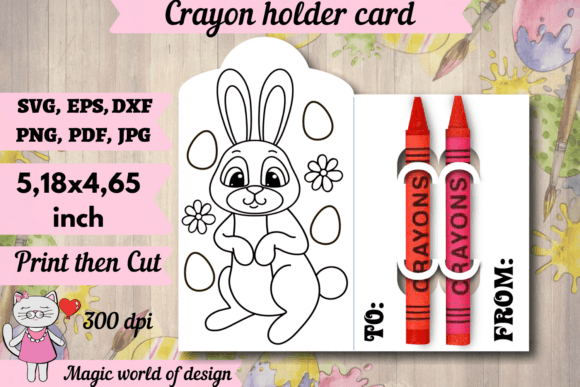
The Easter Rabbit and Flowers Coloring Card exudes a soft, nostalgic spring vibe. It avoids the hyper-saturated, cartoonish extremes that often plague holiday designs, opting instead for a more balanced composition. The layout features a central rabbit figure surrounded by floral elements, creating a natural focal point. For an embroidery designer, this balance is crucial. A design that is too busy can look messy when stitched, while one that is too sparse can feel cheap.
The visual personality here is gentle and inviting. It feels appropriate for a wide range of demographics, from children’s items to adult home decor. This versatility is a significant asset for small business owners who need to maximize the utility of their design assets. However, the term "Coloring Card" in the title suggests a dual purpose. The product description notes it measures 5.18 x 4.65 inches and is intended for printing and cutting with machines like Cricut or Silhouette. This implies the source file may be a vector or high-resolution raster image rather than a pre-digitized machine embroidery design. If you are planning to stitch this, you will likely need to digitize it yourself or convert it using specialized software, which brings us to the technical realities of production.
Real-World Application: From Screen to Stitch
I tested the concept of this design on a medium-weight cotton canvas tote bag, a popular item for spring markets. The 5.18 x 4.65-inch dimensions are substantial. On a tote, this size commands attention without overwhelming the fabric. However, scale is everything. If you were to shrink this down for a sweatshirt embroidery pocket logo or a baby embroidery onesie, you would run into immediate issues with detail loss.
In a real-life scenario, imagine preparing a custom order for a client who wants this rabbit on a textured linen apron. The floral elements, if digitized with too much complexity, could become a tangled mess of thread on a loose-weave fabric. To make this work as a professional embroidery project, I would recommend simplifying the flower details. Use fill stitches for the larger petals and satin stitch borders only where the curves are gentle. Avoid tiny running stitch details that might get lost or break during wear.
For those selling personalized gift items, this design offers a great base for customization. You could easily add a name beneath the rabbit using a complementary script font. This transforms a generic holiday embroidery piece into a bespoke keepsake, increasing the perceived value and justifying a higher price point in your craft business.
Technical Considerations and Fabric Compatibility
Before you commit to stitching, you must consider the substrate. The Easter Rabbit and Flowers Coloring Card relies on clear shapes. On dark fabrics, you will need to ensure your digitizing includes an underlay that provides sufficient coverage. Without proper underlay, the fabric color will peek through, ruining the crispness of the rabbit’s outline. I always advise testing on scrap fabric first. Check your thread colors against both light and dark backgrounds. A pastel pink that looks lovely on white cotton might vanish against a navy blue sweatshirt.
Stitch density is another critical factor. Because the design includes both the rabbit and surrounding flowers, there is a risk of creating a dense block of stitching. On stretchy fabrics like jersey knits used for t-shirts, high density can cause puckering. To mitigate this, use a cut-away stabilizer for garments that will be washed frequently. For woven fabrics like tea towels or pillow covers, a tear-away stabilizer might suffice, but always test first. If you are applying this to a curved surface like a cap, you must reduce the density further and possibly break the design into smaller sections to accommodate the hoop geometry.
It is also worth noting the product description mentions it is a "Coloring Card to Print and Cut." This suggests the primary intent is paper crafts or vinyl cutting. If you are an applique design enthusiast, you could adapt this by using the rabbit shape as a cut-out fabric applique, then stitching around the edges. This reduces stitch count and creates a different texture, which can be very appealing for commercial embroidery projects where production time equals money.
Commercial Viability and Brand Consistency
For small shop product lines, consistency is key. Does this design fit your brand? If your shop specializes in minimalist, modern aesthetics, this whimsical rabbit might clash. However, if your brand leans toward traditional, handmade, or cottage-core styles, it is a perfect fit. The design’s clarity contributes to customer trust. Sloppy stitching or poorly converted files signal amateurism. A clean, well-executed version of this rabbit signals professionalism.
When creating printable mockup images for your online store, ensure the lighting highlights the texture of the thread. Buyers of handmade product items want to see the quality of the stitch. Use the Easter Rabbit and Flowers Coloring Card as a centerpiece in your spring collection, perhaps pairing it with matching floral motifs to create a cohesive suite of products. This strategy increases average order value and enhances brand recognition.
Final Designer Notes
Before you launch this into your production queue, keep these practical steps in mind:
- Verify Licensing: The description does not explicitly state commercial embroidery rights. Since it is marketed for Cricut and Silhouette users, confirm with the creator if you can sell stitched items made from this design. Never assume.
- Digitize with Care: If converting from a graphic, pay attention to corner sharpness. Rounded corners stitch better than sharp angles in embroidery.
- Test Hoop Size: Ensure your machine’s hoop can accommodate the 5.18 x 4.65-inch area plus necessary margins.
- Contrast Check: View your digitized file in black and white to ensure all elements are distinct and no details merge together.
The Easter Rabbit and Flowers Coloring Card has potential, but it requires a skilled hand to translate it from a cutting file concept to a premium embroidered item. With careful attention to stabilizer choice, thread contrast, and stitch density, it can become a standout piece in your spring inventory. Treat it not just as a cute graphic, but as a structural challenge to be solved with technical precision. That is the difference between a hobbyist’s experiment and a professional’s product.